CYPE AEC Collection M124
Overview
CYPE AEC COLLECTION M124 is an end-to-end BIM software suite designed for professionals who need to coordinate architectural modelling, rigorous structural design, complete MEP sizing, and reliable project management within a single, connected workflow. Built around an Open BIM methodology, it enables multidisciplinary teams to develop, exchange and validate project information with high consistency, reducing design clashes, rework, and documentation gaps across the project lifecycle. Whether you are delivering a residential building, a complex commercial development, or infrastructure elements, the collection provides the depth needed for analysis, code-driven design and production-ready deliverables.
The collection supports the design and checking of structural elements such as columns, beams, slabs, floor systems, walls, footings and pile caps, including solutions in reinforced concrete, steel, timber and composite systems. On the building services side, it supports the design and calculation of key MEP disciplines including water supply, plumbing/sanitary, HVAC, electrical and telecommunications systems, combined with performance-oriented simulations such as thermal, acoustic, lighting and fire analyses. For cost and control, it includes tools for bills of quantities, job tracking and project monitoring—helping teams connect design decisions to measurable quantities and execution planning.
A major advantage of CYPE AEC COLLECTION M124 is its strong orientation toward professional practice: broad interoperability, structured documentation output, and compatibility with a wide range of international standards and regulations. This results in faster model-based coordination, fewer site conflicts, improved design quality and clearer collaboration across architects, engineers, contractors and consultants.
Features
|
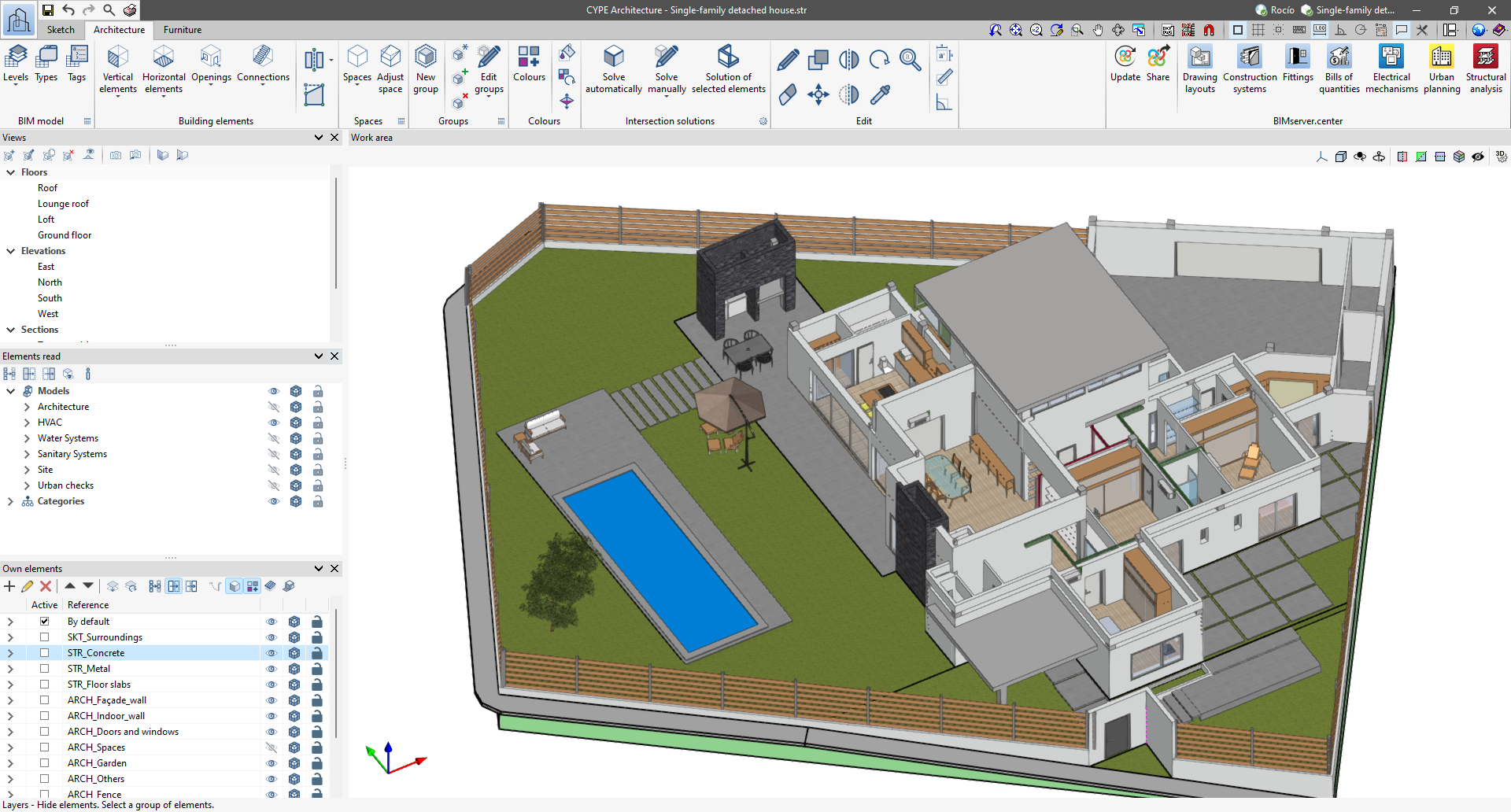
Integration with Open BIM workflows (BIMserver.center) CYPE AEC COLLECTION M124 is engineered for multidisciplinary coordination through an Open BIM approach, allowing each discipline to work with specialised tools while maintaining a coherent, shared project model. By using the BIMserver.center ecosystem, project teams can publish, synchronise and review information from architecture, structures, MEP and analysis applications—helping ensure that decisions made by one discipline do not compromise another. This workflow is particularly valuable in real projects where multiple contributors deliver partial models at different times: instead of waiting for a “final” model, stakeholders can continuously exchange updates, detect inconsistencies early and improve overall project reliability. The result is a streamlined coordination process: fewer geometry conflicts, clearer responsibilities between disciplines, and more confidence that drawings, quantities and calculations reflect the current design state. This integration is ideal for engineering firms and architectural studios seeking to standardise a model-based process across diverse project types, including building and infrastructure, and across distributed teams. With IFC-based interoperability at its core, the suite supports a modern, collaborative pipeline that improves traceability and reduces costly rework.
|
 |
|
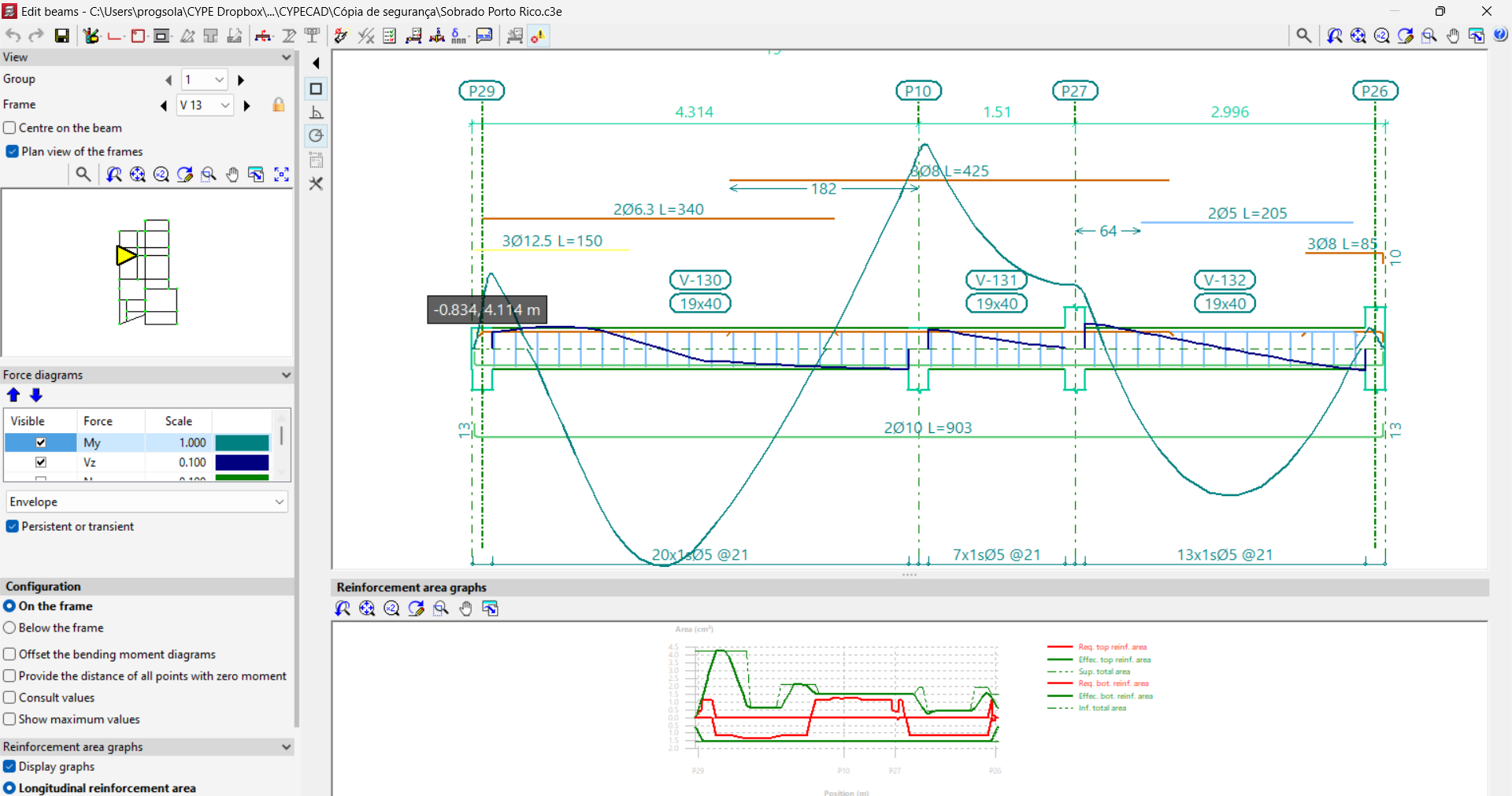
Structural design & analysis across key materials and elements Structural engineering workflows demand both breadth and precision, and CYPE AEC COLLECTION M124 is built to support the complete path from conceptual modelling to code-driven verification and detailing. The suite covers the analysis and design of a wide range of structural components—columns, beams, slabs, floor systems, walls, footings, pile caps and related foundation elements—enabling you to address real-world building typologies with confidence. Importantly, it supports multiple structural materials, including reinforced concrete, steel, timber and composite systems, so teams can select the best solution for performance, construction feasibility and cost. Beyond standard member checks, the collection incorporates advanced capabilities that matter in professional delivery: stability evaluation, buckling analyses, and connection workflows for metal and timber structures. It is suitable for both building structures and more demanding applications where structural coordination with other disciplines is critical. By maintaining a connected BIM-ready environment, designers can align structural decisions with architectural intent and MEP constraints, reducing late-stage conflicts. The emphasis on compatibility with diverse standards and regulations helps teams deliver to local and international compliance requirements while maintaining consistent modelling and documentation practices.
|
 |
|
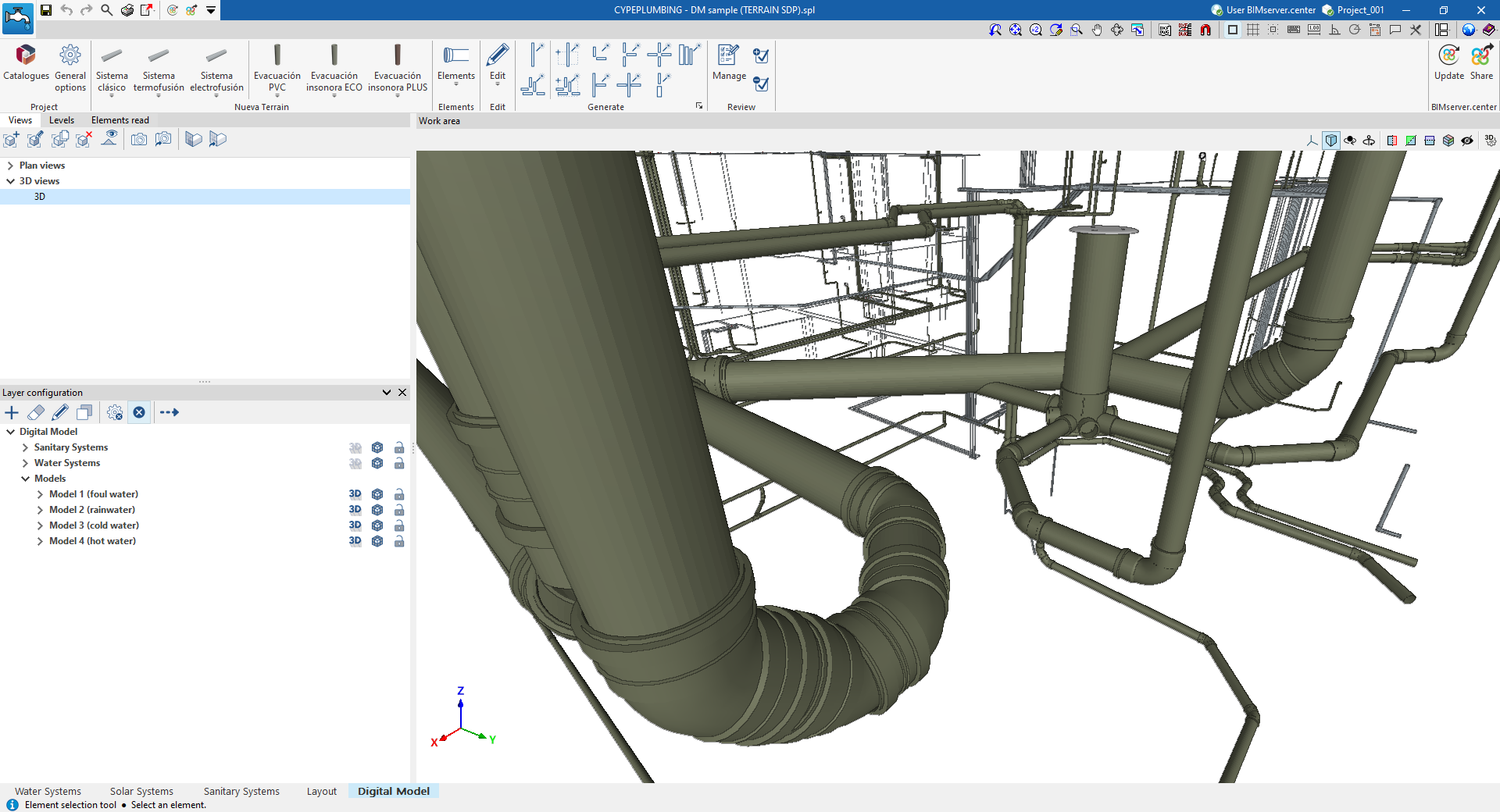
MEP sizing and building services design for coordinated delivery CYPE AEC COLLECTION M124 provides an extensive toolbox for MEP engineers who need reliable sizing, discipline-specific modelling and coordinated output. The suite covers core building services including water supply, plumbing and sanitary systems, HVAC distribution and equipment definition, electrical design, and telecommunications installations—supporting the practical requirements of both design offices and construction documentation teams. In a coordinated BIM process, the value of MEP design is not only accurate calculations but also the ability to validate spatial fit, routing feasibility and inter-discipline compatibility early. The collection enables you to build MEP information in alignment with the project model, ensuring that design choices translate into clear, buildable systems. The workflow supports progressive development: from initial system layouts and sizing to more detailed modelling where required. This is especially useful when project phases shift from concept to detailed design, and the team needs to refine routing, verify service spaces, and update documentation without losing traceability. By maintaining interoperability within an Open BIM environment, the MEP discipline can consume architectural and structural references, reduce clashes, and publish updated systems back to the shared project. The result is improved coordination, fewer on-site conflicts, and documentation that reflects the real engineering intent with higher accuracy.
|
 |
|
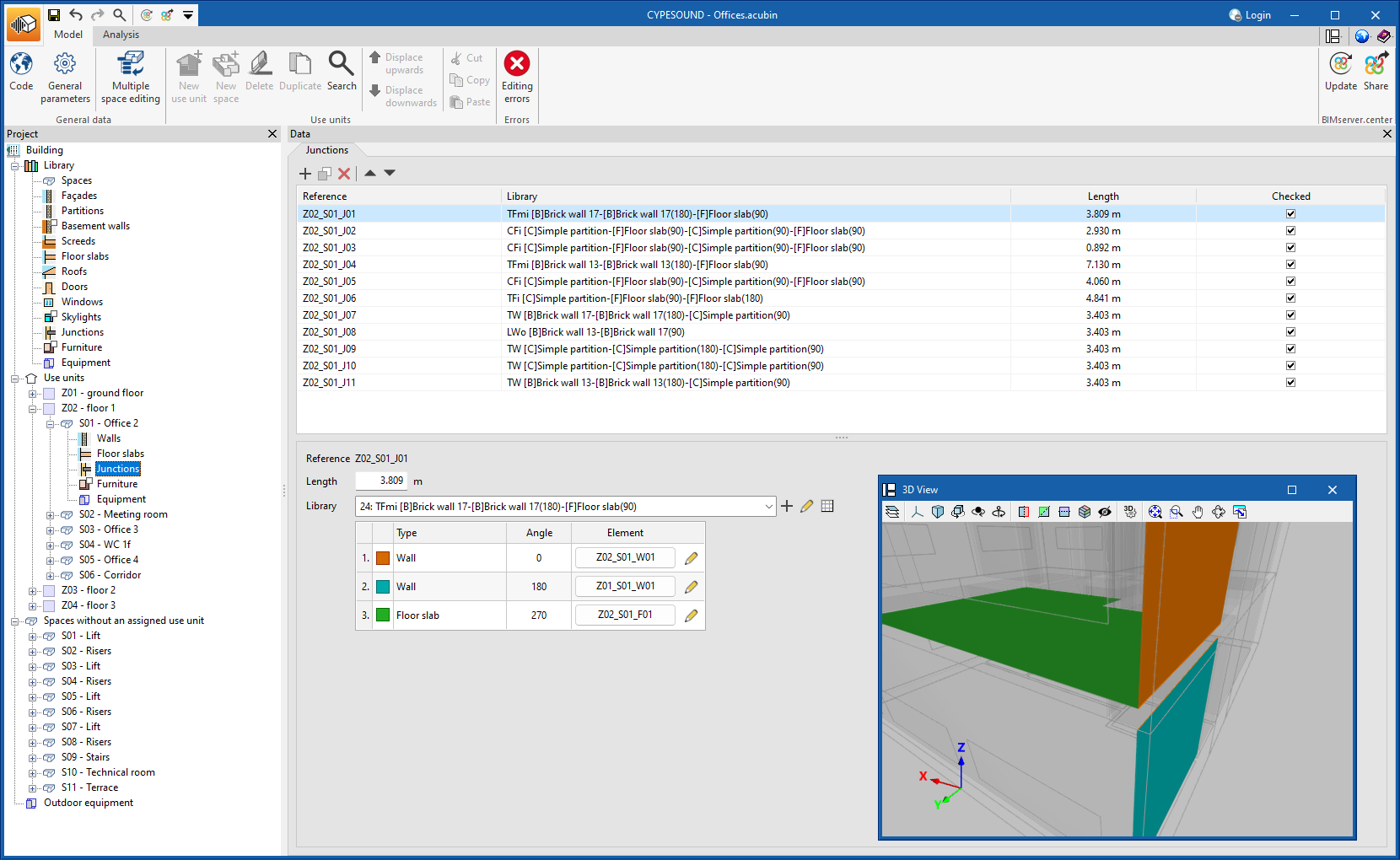
Performance simulations: energy, acoustics, lighting and fire Modern AEC delivery increasingly depends on performance validation, and CYPE AEC COLLECTION M124 addresses this with a strong set of simulation capabilities. The collection includes workflows for thermal and energy analysis, acoustic checks, lighting verification and fire-related evaluation, enabling teams to assess compliance, comfort and risk earlier in the design cycle. This is particularly important when project requirements demand evidence-based decisions—such as verifying indoor environmental quality, checking compliance with relevant standards, or optimising envelope and systems performance to meet sustainability targets. Because these simulations can be tied to the model-based workflow, project teams can test alternatives efficiently and keep a clear link between geometry, systems and analytical assumptions. For example, energy modelling can support improvement measures and comparative analysis, while acoustic checks based on recognised standards can enhance building comfort and regulatory compliance. Lighting checks can help validate interior illumination criteria, and fire-oriented tools extend capability into risk analysis and design verification. By integrating these evaluation steps into a coordinated suite, the collection helps reduce late redesigns and improves the credibility of final submissions, reports and project documentation.
|
 |
|
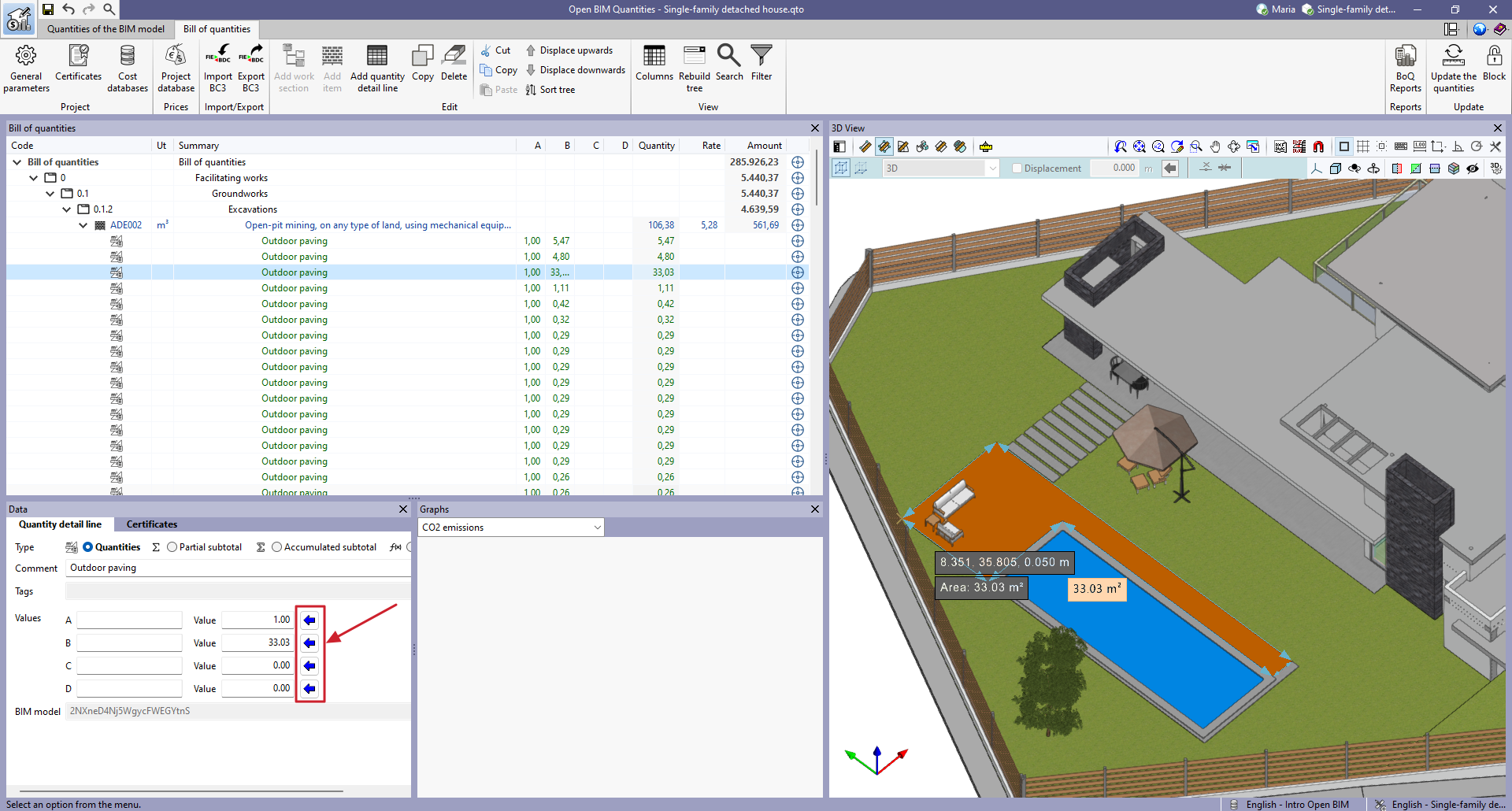
Quantities, cost control and project monitoring for better decision-making Delivering a successful project is not only about correct design—it also requires visibility into quantities, costs and execution control. CYPE AEC COLLECTION M124 includes tools for developing bills of quantities, producing measurable outputs from the project information, and supporting job monitoring activities that help teams track performance over time. This capability is particularly valuable when design decisions need to be evaluated against budget constraints, procurement planning, or construction sequencing. By linking the model and documentation environment to quantity workflows, teams can reduce manual take-offs, improve traceability of measurements and better manage changes. The suite’s approach supports professional cost and project management needs: consolidating quantities, managing databases, and facilitating structured outputs that can be integrated into broader project controls. For organisations working across multiple projects, the ability to standardise cost-related processes and maintain consistency in how quantities are defined and reported becomes a major operational advantage. This helps reduce errors, accelerate reporting and support clearer communication with stakeholders—especially when decisions must be justified through measurable impacts. In combination with Open BIM coordination, the result is a workflow that balances design quality with financial and execution awareness.
|
 |
|
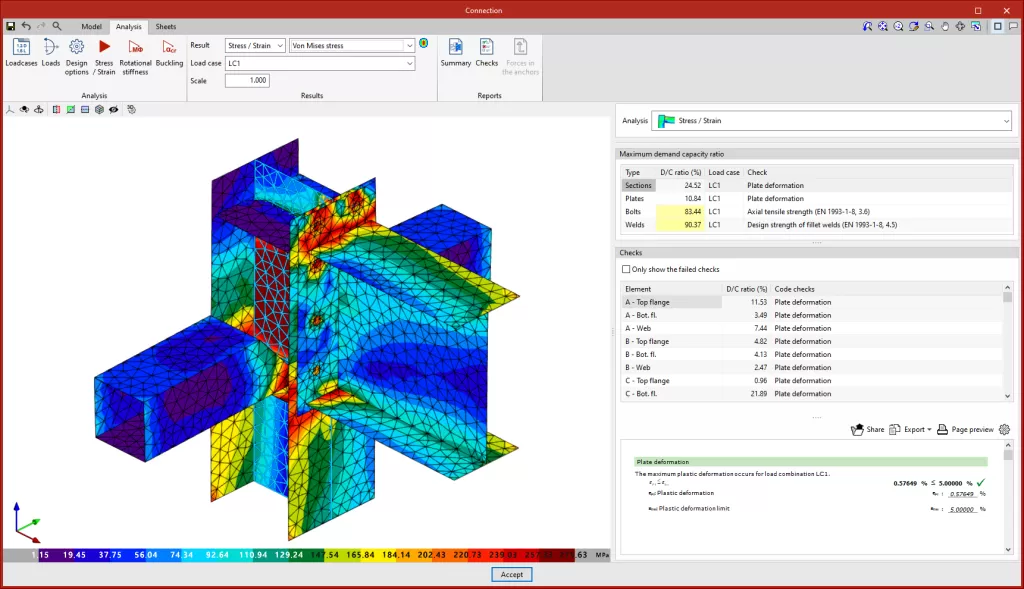
Steel connections and detailing-ready workflows Connection design and detailing can become a bottleneck in steel projects, especially when teams must translate analysis intent into buildable, well-documented solutions. CYPE AEC COLLECTION M124 includes dedicated capabilities for the modelling, design, analysis and graphical documentation of connections between steel members. This helps teams move from global structural behaviour to connection-level decisions while maintaining a coherent workflow. The ability to manage connection logic and documentation within the same ecosystem improves accuracy and reduces misinterpretation between design and fabrication stages. For projects where precision and documentation quality are essential, these workflows support more dependable coordination with fabrication and construction teams. By producing consistent connection information—aligned with the overall model and structural definition—engineers can reduce the risks associated with disconnected workflows and manual detailing. This contributes to smoother handover, fewer RFIs, and better alignment between engineering calculations and shop-level execution. When combined with Open BIM coordination, connection detailing becomes more transparent to other disciplines, improving spatial coordination and ensuring that final assemblies reflect the project’s structural intent.
|
 |
What's included
39 PROGRAMS - 124 MODULES
The AEC Collection M124 includes the following programs:
-
CYPECAD - CYPECAD is a BIM application for the design, analysis, and sizing of structures for building and civil works, which are subject to vertical and horizontal forces, as well as fire exposure.
-
CYPE 3D - CYPE 3D is an agile and efficient program created for the analysis and design of three-dimensional structures with elements made of concrete, steel, composite concrete and steel, aluminium, timber, or any other material, and includes the sizing of connections (welded and bolted connections of rolled and welded steel I sections and hollow structural sections) and their foundations with baseplates, footings, pile caps, and strap and tie beams.
-
CYPE Connect - CYPE Connect can model and analyse, in addition to steel element connections, connections between timber structural elements as well as steel-to-timber connections, using the finite element method. This application uses the OpenSees calculation engine.
-
StruBIM Steel - StruBIM Steel is a program developed for the creation and maintenance of BIM models for structural steel detailing.This program allows users to create a precise BIM model that includes the necessary elements (sections, plates, bolts, butt welds and anchorage) to define the structure. For the results output the program provides shop drawings in DSTV format.
-
StruBIM Box Culverts - StruBIM Box Culverts is an application for designing and checking the compliance of reinforced concrete frames that are rectangular or trapezoidal, or single or multi-cell, for underpasses under roads and for drainage works.
-
StruBIM Embedded Walls - StruBIM Embedded Wall is an application for designing and checking different types of embedded walls (diaphragm walls, piled retaining walls, mini piled retaining walls, steel pile walls and generic embedded walls) for building and public works.
-
StruBIM Cantilever Walls - StruBIM Cantilever Walls is a program created to design and check reinforced concrete cantilever walls for retaining soil. It automatically carries out the pre-design of the geometry, the analysis of the elevation reinforcement and the geometrical and reinforcement design of the wall footing.
-
StruBIM Deep Beams - StruBIM Deep Beams is a tool for the design of deep beams. This application is integrated in the Open BIM workflow using the IFC standard.
-
CYPE Connect Classic - CYPE Connect Classic is a program for designing, checking, and generating the detailing and reports of welded and bolted connections with rolled and reinforced rolled-I sections; welded connections of circular hollow sections; and welded baseplates of steel columns.
-
CYPEPLUMBING - CYPEPLUMBING is a program created to assist professionals in the design and analysis of water supply systems, drainage systems and solar thermal energy systems in any type of building.
-
CYPEHVAC - CYPEHVAC is a program for designing air conditioning systems that covers heating, ventilation and air conditioning. This tool allows users to design radiators, fan coils, boilers, heat pumps, ducted ventilation networks, heat recovery units, fans and air handling units. The application allows the necessary information to be imported from other Open BIM tools, so that both the architectural models and the results of the CYPETHERM LOADS analysis can be used in the system design.
-
CYPEHVAC Radiant Floor - CYPEHVAC Radiant Floor is a BIM application for designing radiant floor heating and cooling systems. The software imports architectural models developed in IFC format, where systems can be entered and designed using different tools. There are three main options offered by the program: automatically entering circuits, updating the pattern considering both obstacles and spaces; and automatically measuring the materials necessary for the complete installation of the systems.
-
CYPEHVAC Schematics - CYPEHVAC Schematics is a free program designed to draw the schematic diagrams of hydronic HVAC systems. The components are represented using symbols in accordance with ASHRAE standards.
-
CYPETHERM EPlus - CYPETHERM EPlus is an application for the simulation and modelling of buildings with EnergyPlus™.
-
CYPETHERM LOADS - Thermal load calculation of buildings according to the Radiant Time Series Method (RTSM), proposed by ASHRAE, integrated in the Open BIM workflow.
-
CYPETHERM BRIDGES - CYPETHERM BRIDGES is a program designed to determine the thermal transmittance in linear thermal bridges by solving and processing a heat transfer finite element model based on the EN ISO 10211 standard.
-
CYPETHERM HYGRO - CYPETHERM HYGRO is a program created to calculate the internal surface resistance factor considering the critical surface humidity and interstitial condensation in building elements. The program carries out the calculation based on the hygrothermal performance of building components and building elements in accordance with the analysis method of the ISO 13788:2012 standard.
-
CYPETHERM Improvements - CYPETHERM Improvements is a tool for energy audits and analysis of improvement measures in buildings.
-
CYPELUX - CYPELUX is a free tool created to calculate the lighting levels of normal and emergency lighting installations.
-
CYPESOUND - Design and verification of the sound insulation against airborne noise and impact noise, sound immission and reverberation level.
-
CYPETEL - CYPETEL is used for the design and analysis of telecommunications installations, and includes manufacturers' catalogues. The program allows users to configure infrastructure and network diagrams and create graphical compositions of installation details. It also includes an option for importing the values and characteristics of predefined codes, and for defining checks for codes that are not included.
-
CYPELEC - CYPELEC is a program created for designing low voltage electrical systems. CYPELEC features different work environments according to the applicable standards: CYPELEC Core, CYPELEC REBT, CYPELEC NF and CYPELEC RETIE.
-
CYPELEC PV Systems - CYPELEC PV Systems is a tool to assist users in the design of on-grid photovoltaic systems (amongst which are self-consumption installations) or off-grid photovoltaic systems.
-
CYPELEC MULTILINE - CYPELEC MULTILINE is a program designed to draw, manually or automatically, the multiline diagram of an electrical installation.
-
CYPEFIRE - Validation of basic fire safety rules. Passive protection (compartmentalization, evacuation, external propagation, etc.) and active protection (extinguishers, detectors, etc.).
-
CYPEFIRE FDS - CYPEFIRE FDS is an application for the design of complex building models, to carry out simulations of fire evolution using the Fire Dynamics Simulator developed by the NIST (National Institute of Standards and Technology, USA).
-
Open BIM Switchboard - Open BIM Switchboard has been created to design the enclosures that are present in electrical systems (cabinets, panels and switchboards).
-
Open BIM Cable Routing - Open BIM Cable Routing is a program designed for the BIM modelling of cable routing systems. The tool allows users to spatially lay out manufacturers' solutions for cable routing, both for electrical cables and telecommunication cables, in a three-dimensional work environment.
-
CYPEFIRE Hydraulic Systems - CYPEFIRE Hydraulic Systems is a tool created to design hydraulic networks for fire protection using sprinklers and fire hose reels in accordance with the NFPA®13 (National Fire Protection Association) standard.
-
CYPEFIRE Pressure Systems - CYPEFIRE Pressure Systems designs pressure differential systems to retain smoke in non-airtight physical barriers, in accordance with the EN 12101-6 code.
-
CYPE Water Supply - CYPE Water Supply was created for the analysis, design, checking and automatic sizing of meshed, branched and mixed water supply networks. It can also read digital terrain models in IFC4 format.
-
CYPE Sewerage - CYPE Sewerage was created for the analysis, design, checking and automatic sizing of branched sewerage networks with a single discharge point, the purpose of which is to evacuate water from collector wells to the discharge point. It can also read digital terrain models in IFC4 format.
-
CYPE Gas Supply - CYPE Gas Supply is a program for the design of gas distribution networks in urban infrastructures. The application is capable of importing IFC files containing topographic data to facilitate the laying of the distribution network and has tools that automatically carry out both the dimensioning of the network and the generation of graphic documentation related to the installation of the network.
-
Arquimedes - Arquimedes is a job management tool that allows all kinds of cost estimations to be carried out in a project: its quantities, certifications, multiple technical documents associated with the project, as well as the planning and job control during the construction process.
-
Open BIM Quantities - Open BIM Quantities is a tool for extracting quantities and creating bills of quantities based on BIM models that have been defined using the IFC standard.
-
CYPE Cost Estimator - CYPE Cost Estimator has been created to automatically estimate the execution cost of a construction project during its preliminary phases, in a simple and practical way, using a fast, efficient and precise design model, by taking into account the built surface, height of the building, and typological, construction, geographic and socioeconomic factors.
-
Open BIM Model Checker - Open BIM Model Checker is an application developed to analyse and inspect BIM models. The aim of this program is to help users detect issues in the models, locate clashes between the different disciplines and consult the project’s documents quickly and easily.
-
IFC Builder - IFC Builder is a free CYPE application designed for the creation and maintenance of IFC building models.
-
Plugin MedBIM - Revit - Plugin for installing in Autodesk Revit and extracting quantities for bills of quantities. This is used in together with Arquimedes.
Original: $18,062.00
-70%$18,062.00
$5,418.60
Description
Overview
CYPE AEC COLLECTION M124 is an end-to-end BIM software suite designed for professionals who need to coordinate architectural modelling, rigorous structural design, complete MEP sizing, and reliable project management within a single, connected workflow. Built around an Open BIM methodology, it enables multidisciplinary teams to develop, exchange and validate project information with high consistency, reducing design clashes, rework, and documentation gaps across the project lifecycle. Whether you are delivering a residential building, a complex commercial development, or infrastructure elements, the collection provides the depth needed for analysis, code-driven design and production-ready deliverables.
The collection supports the design and checking of structural elements such as columns, beams, slabs, floor systems, walls, footings and pile caps, including solutions in reinforced concrete, steel, timber and composite systems. On the building services side, it supports the design and calculation of key MEP disciplines including water supply, plumbing/sanitary, HVAC, electrical and telecommunications systems, combined with performance-oriented simulations such as thermal, acoustic, lighting and fire analyses. For cost and control, it includes tools for bills of quantities, job tracking and project monitoring—helping teams connect design decisions to measurable quantities and execution planning.
A major advantage of CYPE AEC COLLECTION M124 is its strong orientation toward professional practice: broad interoperability, structured documentation output, and compatibility with a wide range of international standards and regulations. This results in faster model-based coordination, fewer site conflicts, improved design quality and clearer collaboration across architects, engineers, contractors and consultants.
Features
|
Integration with Open BIM workflows (BIMserver.center) CYPE AEC COLLECTION M124 is engineered for multidisciplinary coordination through an Open BIM approach, allowing each discipline to work with specialised tools while maintaining a coherent, shared project model. By using the BIMserver.center ecosystem, project teams can publish, synchronise and review information from architecture, structures, MEP and analysis applications—helping ensure that decisions made by one discipline do not compromise another. This workflow is particularly valuable in real projects where multiple contributors deliver partial models at different times: instead of waiting for a “final” model, stakeholders can continuously exchange updates, detect inconsistencies early and improve overall project reliability. The result is a streamlined coordination process: fewer geometry conflicts, clearer responsibilities between disciplines, and more confidence that drawings, quantities and calculations reflect the current design state. This integration is ideal for engineering firms and architectural studios seeking to standardise a model-based process across diverse project types, including building and infrastructure, and across distributed teams. With IFC-based interoperability at its core, the suite supports a modern, collaborative pipeline that improves traceability and reduces costly rework.
|
|
|
Structural design & analysis across key materials and elements Structural engineering workflows demand both breadth and precision, and CYPE AEC COLLECTION M124 is built to support the complete path from conceptual modelling to code-driven verification and detailing. The suite covers the analysis and design of a wide range of structural components—columns, beams, slabs, floor systems, walls, footings, pile caps and related foundation elements—enabling you to address real-world building typologies with confidence. Importantly, it supports multiple structural materials, including reinforced concrete, steel, timber and composite systems, so teams can select the best solution for performance, construction feasibility and cost. Beyond standard member checks, the collection incorporates advanced capabilities that matter in professional delivery: stability evaluation, buckling analyses, and connection workflows for metal and timber structures. It is suitable for both building structures and more demanding applications where structural coordination with other disciplines is critical. By maintaining a connected BIM-ready environment, designers can align structural decisions with architectural intent and MEP constraints, reducing late-stage conflicts. The emphasis on compatibility with diverse standards and regulations helps teams deliver to local and international compliance requirements while maintaining consistent modelling and documentation practices.
|
|
|
MEP sizing and building services design for coordinated delivery CYPE AEC COLLECTION M124 provides an extensive toolbox for MEP engineers who need reliable sizing, discipline-specific modelling and coordinated output. The suite covers core building services including water supply, plumbing and sanitary systems, HVAC distribution and equipment definition, electrical design, and telecommunications installations—supporting the practical requirements of both design offices and construction documentation teams. In a coordinated BIM process, the value of MEP design is not only accurate calculations but also the ability to validate spatial fit, routing feasibility and inter-discipline compatibility early. The collection enables you to build MEP information in alignment with the project model, ensuring that design choices translate into clear, buildable systems. The workflow supports progressive development: from initial system layouts and sizing to more detailed modelling where required. This is especially useful when project phases shift from concept to detailed design, and the team needs to refine routing, verify service spaces, and update documentation without losing traceability. By maintaining interoperability within an Open BIM environment, the MEP discipline can consume architectural and structural references, reduce clashes, and publish updated systems back to the shared project. The result is improved coordination, fewer on-site conflicts, and documentation that reflects the real engineering intent with higher accuracy.
|
|
|
Performance simulations: energy, acoustics, lighting and fire Modern AEC delivery increasingly depends on performance validation, and CYPE AEC COLLECTION M124 addresses this with a strong set of simulation capabilities. The collection includes workflows for thermal and energy analysis, acoustic checks, lighting verification and fire-related evaluation, enabling teams to assess compliance, comfort and risk earlier in the design cycle. This is particularly important when project requirements demand evidence-based decisions—such as verifying indoor environmental quality, checking compliance with relevant standards, or optimising envelope and systems performance to meet sustainability targets. Because these simulations can be tied to the model-based workflow, project teams can test alternatives efficiently and keep a clear link between geometry, systems and analytical assumptions. For example, energy modelling can support improvement measures and comparative analysis, while acoustic checks based on recognised standards can enhance building comfort and regulatory compliance. Lighting checks can help validate interior illumination criteria, and fire-oriented tools extend capability into risk analysis and design verification. By integrating these evaluation steps into a coordinated suite, the collection helps reduce late redesigns and improves the credibility of final submissions, reports and project documentation.
|
|
|
Quantities, cost control and project monitoring for better decision-making Delivering a successful project is not only about correct design—it also requires visibility into quantities, costs and execution control. CYPE AEC COLLECTION M124 includes tools for developing bills of quantities, producing measurable outputs from the project information, and supporting job monitoring activities that help teams track performance over time. This capability is particularly valuable when design decisions need to be evaluated against budget constraints, procurement planning, or construction sequencing. By linking the model and documentation environment to quantity workflows, teams can reduce manual take-offs, improve traceability of measurements and better manage changes. The suite’s approach supports professional cost and project management needs: consolidating quantities, managing databases, and facilitating structured outputs that can be integrated into broader project controls. For organisations working across multiple projects, the ability to standardise cost-related processes and maintain consistency in how quantities are defined and reported becomes a major operational advantage. This helps reduce errors, accelerate reporting and support clearer communication with stakeholders—especially when decisions must be justified through measurable impacts. In combination with Open BIM coordination, the result is a workflow that balances design quality with financial and execution awareness.
|
|
|
Steel connections and detailing-ready workflows Connection design and detailing can become a bottleneck in steel projects, especially when teams must translate analysis intent into buildable, well-documented solutions. CYPE AEC COLLECTION M124 includes dedicated capabilities for the modelling, design, analysis and graphical documentation of connections between steel members. This helps teams move from global structural behaviour to connection-level decisions while maintaining a coherent workflow. The ability to manage connection logic and documentation within the same ecosystem improves accuracy and reduces misinterpretation between design and fabrication stages. For projects where precision and documentation quality are essential, these workflows support more dependable coordination with fabrication and construction teams. By producing consistent connection information—aligned with the overall model and structural definition—engineers can reduce the risks associated with disconnected workflows and manual detailing. This contributes to smoother handover, fewer RFIs, and better alignment between engineering calculations and shop-level execution. When combined with Open BIM coordination, connection detailing becomes more transparent to other disciplines, improving spatial coordination and ensuring that final assemblies reflect the project’s structural intent.
|
|
What's included
39 PROGRAMS - 124 MODULES
The AEC Collection M124 includes the following programs:
-
CYPECAD - CYPECAD is a BIM application for the design, analysis, and sizing of structures for building and civil works, which are subject to vertical and horizontal forces, as well as fire exposure.
-
CYPE 3D - CYPE 3D is an agile and efficient program created for the analysis and design of three-dimensional structures with elements made of concrete, steel, composite concrete and steel, aluminium, timber, or any other material, and includes the sizing of connections (welded and bolted connections of rolled and welded steel I sections and hollow structural sections) and their foundations with baseplates, footings, pile caps, and strap and tie beams.
-
CYPE Connect - CYPE Connect can model and analyse, in addition to steel element connections, connections between timber structural elements as well as steel-to-timber connections, using the finite element method. This application uses the OpenSees calculation engine.
-
StruBIM Steel - StruBIM Steel is a program developed for the creation and maintenance of BIM models for structural steel detailing.This program allows users to create a precise BIM model that includes the necessary elements (sections, plates, bolts, butt welds and anchorage) to define the structure. For the results output the program provides shop drawings in DSTV format.
-
StruBIM Box Culverts - StruBIM Box Culverts is an application for designing and checking the compliance of reinforced concrete frames that are rectangular or trapezoidal, or single or multi-cell, for underpasses under roads and for drainage works.
-
StruBIM Embedded Walls - StruBIM Embedded Wall is an application for designing and checking different types of embedded walls (diaphragm walls, piled retaining walls, mini piled retaining walls, steel pile walls and generic embedded walls) for building and public works.
-
StruBIM Cantilever Walls - StruBIM Cantilever Walls is a program created to design and check reinforced concrete cantilever walls for retaining soil. It automatically carries out the pre-design of the geometry, the analysis of the elevation reinforcement and the geometrical and reinforcement design of the wall footing.
-
StruBIM Deep Beams - StruBIM Deep Beams is a tool for the design of deep beams. This application is integrated in the Open BIM workflow using the IFC standard.
-
CYPE Connect Classic - CYPE Connect Classic is a program for designing, checking, and generating the detailing and reports of welded and bolted connections with rolled and reinforced rolled-I sections; welded connections of circular hollow sections; and welded baseplates of steel columns.
-
CYPEPLUMBING - CYPEPLUMBING is a program created to assist professionals in the design and analysis of water supply systems, drainage systems and solar thermal energy systems in any type of building.
-
CYPEHVAC - CYPEHVAC is a program for designing air conditioning systems that covers heating, ventilation and air conditioning. This tool allows users to design radiators, fan coils, boilers, heat pumps, ducted ventilation networks, heat recovery units, fans and air handling units. The application allows the necessary information to be imported from other Open BIM tools, so that both the architectural models and the results of the CYPETHERM LOADS analysis can be used in the system design.
-
CYPEHVAC Radiant Floor - CYPEHVAC Radiant Floor is a BIM application for designing radiant floor heating and cooling systems. The software imports architectural models developed in IFC format, where systems can be entered and designed using different tools. There are three main options offered by the program: automatically entering circuits, updating the pattern considering both obstacles and spaces; and automatically measuring the materials necessary for the complete installation of the systems.
-
CYPEHVAC Schematics - CYPEHVAC Schematics is a free program designed to draw the schematic diagrams of hydronic HVAC systems. The components are represented using symbols in accordance with ASHRAE standards.
-
CYPETHERM EPlus - CYPETHERM EPlus is an application for the simulation and modelling of buildings with EnergyPlus™.
-
CYPETHERM LOADS - Thermal load calculation of buildings according to the Radiant Time Series Method (RTSM), proposed by ASHRAE, integrated in the Open BIM workflow.
-
CYPETHERM BRIDGES - CYPETHERM BRIDGES is a program designed to determine the thermal transmittance in linear thermal bridges by solving and processing a heat transfer finite element model based on the EN ISO 10211 standard.
-
CYPETHERM HYGRO - CYPETHERM HYGRO is a program created to calculate the internal surface resistance factor considering the critical surface humidity and interstitial condensation in building elements. The program carries out the calculation based on the hygrothermal performance of building components and building elements in accordance with the analysis method of the ISO 13788:2012 standard.
-
CYPETHERM Improvements - CYPETHERM Improvements is a tool for energy audits and analysis of improvement measures in buildings.
-
CYPELUX - CYPELUX is a free tool created to calculate the lighting levels of normal and emergency lighting installations.
-
CYPESOUND - Design and verification of the sound insulation against airborne noise and impact noise, sound immission and reverberation level.
-
CYPETEL - CYPETEL is used for the design and analysis of telecommunications installations, and includes manufacturers' catalogues. The program allows users to configure infrastructure and network diagrams and create graphical compositions of installation details. It also includes an option for importing the values and characteristics of predefined codes, and for defining checks for codes that are not included.
-
CYPELEC - CYPELEC is a program created for designing low voltage electrical systems. CYPELEC features different work environments according to the applicable standards: CYPELEC Core, CYPELEC REBT, CYPELEC NF and CYPELEC RETIE.
-
CYPELEC PV Systems - CYPELEC PV Systems is a tool to assist users in the design of on-grid photovoltaic systems (amongst which are self-consumption installations) or off-grid photovoltaic systems.
-
CYPELEC MULTILINE - CYPELEC MULTILINE is a program designed to draw, manually or automatically, the multiline diagram of an electrical installation.
-
CYPEFIRE - Validation of basic fire safety rules. Passive protection (compartmentalization, evacuation, external propagation, etc.) and active protection (extinguishers, detectors, etc.).
-
CYPEFIRE FDS - CYPEFIRE FDS is an application for the design of complex building models, to carry out simulations of fire evolution using the Fire Dynamics Simulator developed by the NIST (National Institute of Standards and Technology, USA).
-
Open BIM Switchboard - Open BIM Switchboard has been created to design the enclosures that are present in electrical systems (cabinets, panels and switchboards).
-
Open BIM Cable Routing - Open BIM Cable Routing is a program designed for the BIM modelling of cable routing systems. The tool allows users to spatially lay out manufacturers' solutions for cable routing, both for electrical cables and telecommunication cables, in a three-dimensional work environment.
-
CYPEFIRE Hydraulic Systems - CYPEFIRE Hydraulic Systems is a tool created to design hydraulic networks for fire protection using sprinklers and fire hose reels in accordance with the NFPA®13 (National Fire Protection Association) standard.
-
CYPEFIRE Pressure Systems - CYPEFIRE Pressure Systems designs pressure differential systems to retain smoke in non-airtight physical barriers, in accordance with the EN 12101-6 code.
-
CYPE Water Supply - CYPE Water Supply was created for the analysis, design, checking and automatic sizing of meshed, branched and mixed water supply networks. It can also read digital terrain models in IFC4 format.
-
CYPE Sewerage - CYPE Sewerage was created for the analysis, design, checking and automatic sizing of branched sewerage networks with a single discharge point, the purpose of which is to evacuate water from collector wells to the discharge point. It can also read digital terrain models in IFC4 format.
-
CYPE Gas Supply - CYPE Gas Supply is a program for the design of gas distribution networks in urban infrastructures. The application is capable of importing IFC files containing topographic data to facilitate the laying of the distribution network and has tools that automatically carry out both the dimensioning of the network and the generation of graphic documentation related to the installation of the network.
-
Arquimedes - Arquimedes is a job management tool that allows all kinds of cost estimations to be carried out in a project: its quantities, certifications, multiple technical documents associated with the project, as well as the planning and job control during the construction process.
-
Open BIM Quantities - Open BIM Quantities is a tool for extracting quantities and creating bills of quantities based on BIM models that have been defined using the IFC standard.
-
CYPE Cost Estimator - CYPE Cost Estimator has been created to automatically estimate the execution cost of a construction project during its preliminary phases, in a simple and practical way, using a fast, efficient and precise design model, by taking into account the built surface, height of the building, and typological, construction, geographic and socioeconomic factors.
-
Open BIM Model Checker - Open BIM Model Checker is an application developed to analyse and inspect BIM models. The aim of this program is to help users detect issues in the models, locate clashes between the different disciplines and consult the project’s documents quickly and easily.
-
IFC Builder - IFC Builder is a free CYPE application designed for the creation and maintenance of IFC building models.
-
Plugin MedBIM - Revit - Plugin for installing in Autodesk Revit and extracting quantities for bills of quantities. This is used in together with Arquimedes.